


Parker · 1921-1933
Parker Duofold
Variants
| Model | Material | Price | Notes |
|---|---|---|---|
| Senior (Big Red) | Largest size, 139mm x 14.5mm | The iconic Big Red. Hard rubber 1921-25, celluloid after. | |
| Junior | 115-122mm x 13.5mm | Most common size | |
| Lady | 114mm x 12mm, slender, ring-top design | ||
| Special | Junior-width at Senior-length (136mm or 129mm) | ||
| Vest Pocket | Tiny model (1930) | ||
| Juniorette | Lady design with Junior-style clip (no ring) | ||
| De Luxe | Premium cap bands (14K solid gold or 12K gold-filled) | ||
| Mandarin Yellow | Yellow celluloid (1927) | $2000-5000+ | Holy grail of pen collecting |
| Black-tipped Jade | Jade celluloid, unmarked Duofold (1926) |
What to Look For
'Geo. S. Parker DUOFOLD' imprint. Cap band evolution: bandless (1921-22), single narrow (1923+), broad De Luxe (1922+), double split (1928), triple (1928 De Luxe). Hard rubber to celluloid transition mid-1925 — transitional models exist. 1929 redesign created streamlined tapered versions. Mandarin Yellow Senior is the holy grail. English/Canadian production continued into the 1940s after US stopped in 1933.
The Parker Duofold is one of the most iconic and collectible fountain pens ever made — “twice the pen” for twice the price, it transformed Parker from a regional manufacturer into a global brand.1
History
Introduced in 1921, the Duofold Senior in bright orange-red hard rubber (nicknamed “Big Red”) was a bold departure from the black pens that dominated the market.1 At $7 — double the price of most pens — it was a gamble that paid off spectacularly. The pen became a status symbol and Parker’s sales exploded.1 The 1923 Parker catalog promotes it as “The Patrician of Fountain Pens.”2
Materials
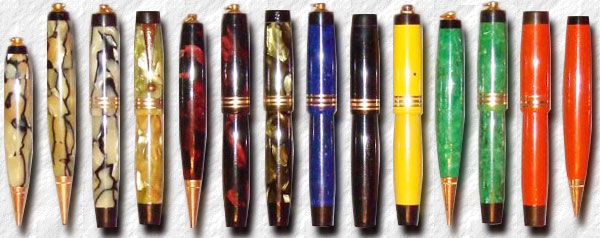
The Duofold transitioned from hard rubber (1921-1925) to “Permanite” celluloid in mid-1925, opening up a rainbow of colors:1
- Red/Orange (1921+) — the original “Big Red,” first in hard rubber, then Permanite
- Black (1921+) — available throughout production
- Green Jade (1926) — deeper opaque version from 19271
- Lapis Lazuli (1927) — blue-on-blue marble variant1
- Mandarin Yellow (1927) — the holy grail of pen collecting, commanding $2,000-5,000+ at auction1
- Pearl and Black (1928) — De Luxe line1
- Moderne Green and Pearl (1930)1
Sizes
| Size | Dimensions | Notes |
|---|---|---|
| Senior | 139mm × 14.5mm | The flagship “Big Red.” Largest and most valuable.1 |
| Junior | 115-122mm × 13.5mm | Most common size1 |
| Lady | 114mm × 12mm | Slender, ring-top design for women1 |
| Special | 129-136mm × 13.5mm | Junior-width at various lengths1 |
| Vest Pocket | Small | Introduced 19301 |
Dating by Cap Bands
The cap band style changed every few years, making it the primary dating method:1
- Bandless (1921-1922)
- Single narrow band (1923+)
- Broad band (De Luxe) (1922+)
- Double split bands (1928)
- Three bands (1928 De Luxe)
Identification
Look for “GEO.S.PARKER DUOFOLD MADE IN U.S.A.” barrel imprint.1 Transitional models combining 1928-style caps with 1929 streamlined bodies are common.1 A 1929 redesign created tapered, shorter “streamlined” versions.1 English and Canadian production continued into the 1940s after American production ceased in 1933.1
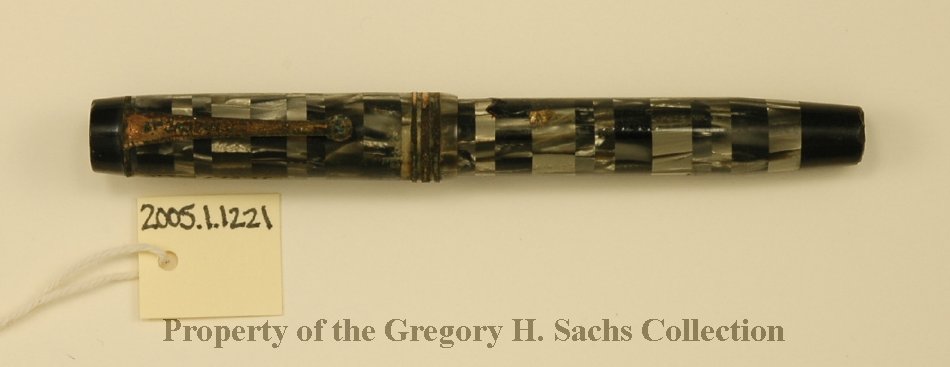
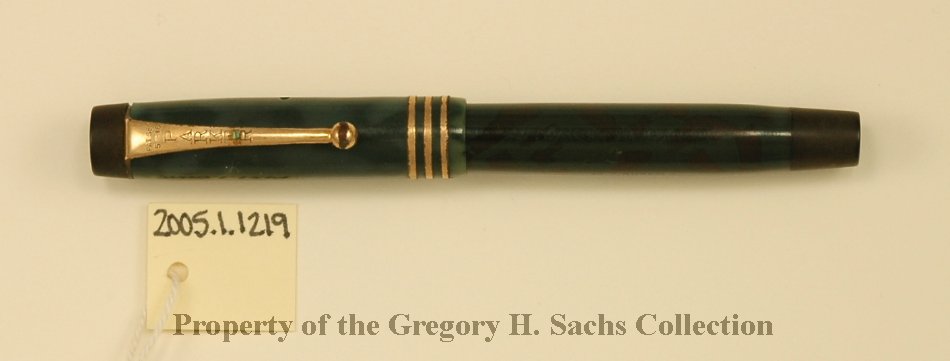
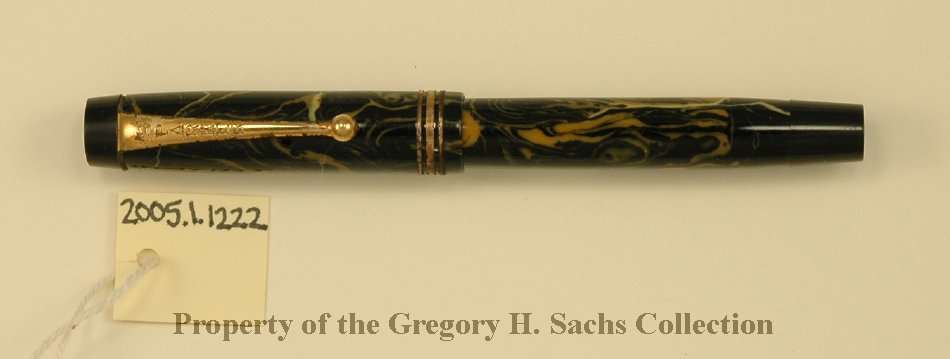
The Sachs-Fultz Collection holds rare prototype Duofolds including Black & Cream, Blue & Green, and Grey Pearl Junior variants, plus an Osmia Lapis Blue Senior from rare German production.3