Waterman · 1927-1946+
Waterman Color Nibs
What to Look For
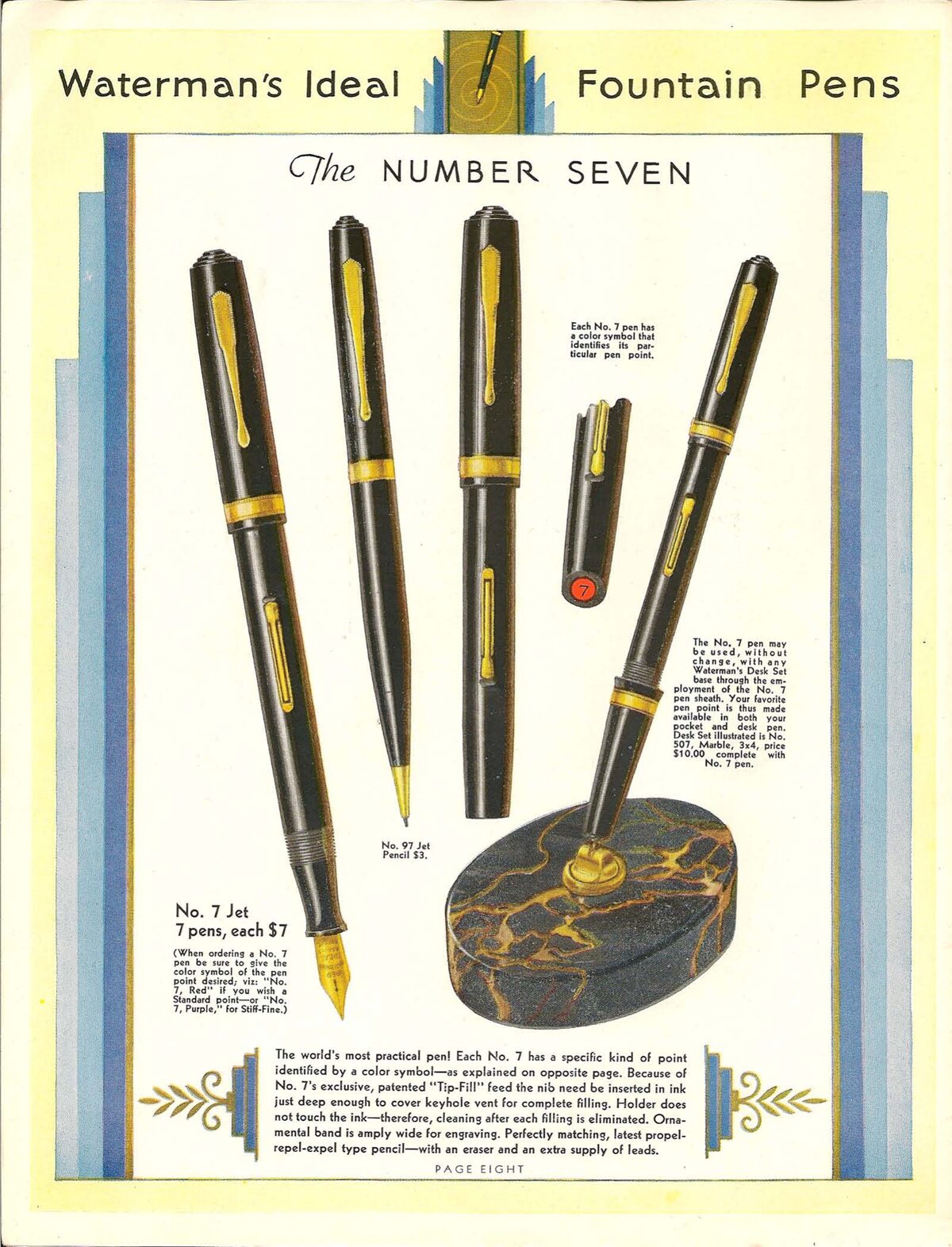
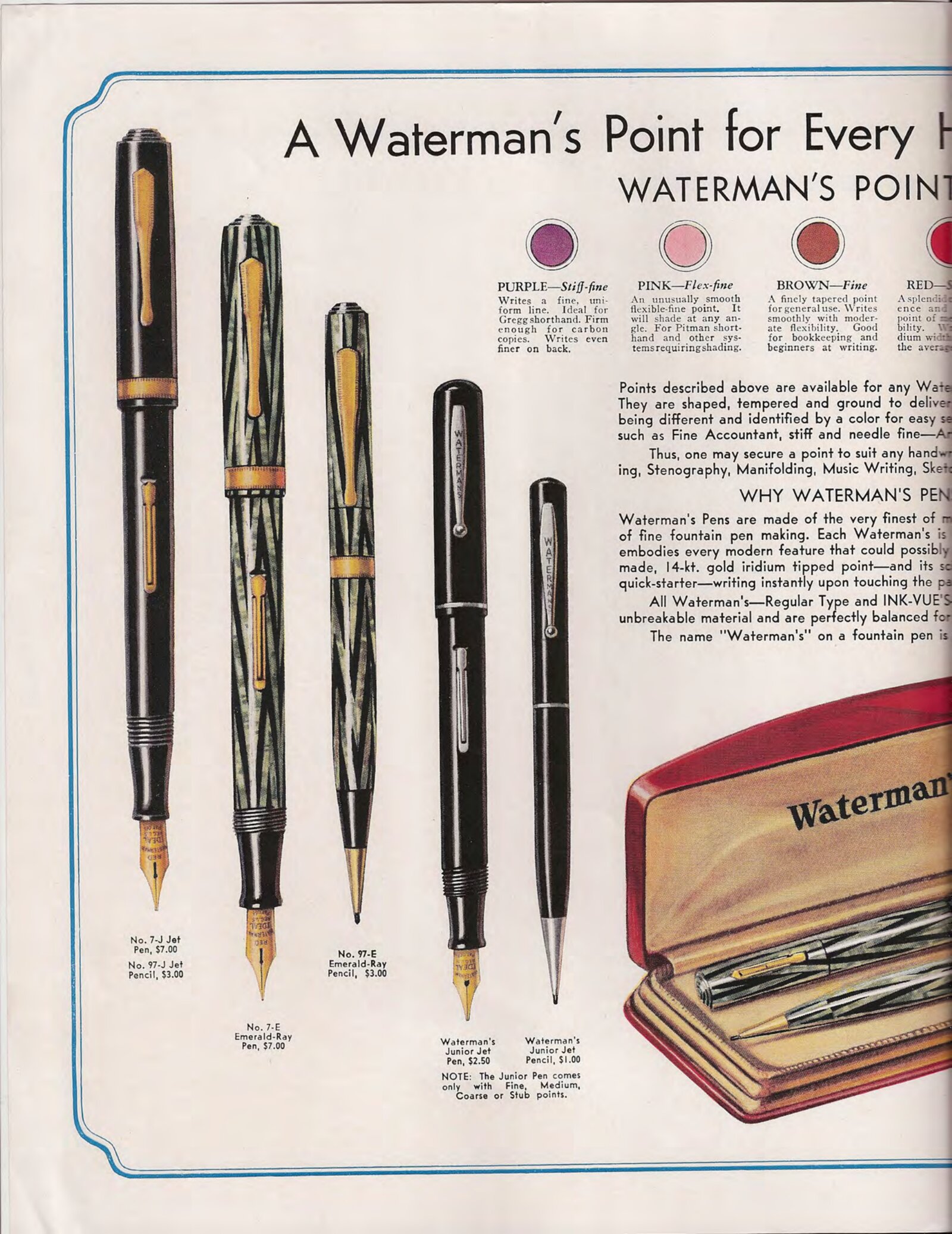
Introduced 1927 with six colors (Red, Green, Pink, Purple, Blue, Yellow). Grey added 1928-29. Black added later. White is mythical — no authenticated example known (Richard Binder's 2007 claimed discovery was later revealed as a hoax). Rarity ranking (common to rare): Red > Brown > Green > Pink > Purple > Yellow > Blue > Grey > Black > White (unconfirmed). Pink nibs fetch the highest prices (thousands of dollars). Color nibs appear primarily on Ripple pens and Models 5 and 7.
Waterman’s innovative color-coded nib system — each nib color indicated a specific writing characteristic, introduced in 1927 with the Ripple line.1
The Seven Standard Colors
| Color | Type | Purpose |
|---|---|---|
| Red | Standard | General correspondence, medium flexibility1 |
| Green | Rigid | Carbon copies and manifolding1 |
| Pink | Flex Fine | Stenography and shading — the most valuable color today1 |
| Purple | Stiff Fine | Accountants, small figures1 |
| Yellow | Rounded (ball) | Left-handed writers1 |
| Brown | Fine | General use, smooth and scratch-free1 |
| Blue | Blunt/Stub | Rapid writers, broad strokes1 |
Later Additions
- Grey (Oblique): Added 1928-29, for writers who hold the pen at an angle1
- Black (Flex Medium): Late addition, for stenographers1
The Mythical White Nib
The White nib (designated “Coarse”) appeared on pen tray charts from the late 1930s/early 1940s, but no authenticated example has ever been confirmed.1 Richard Binder claimed discovery of one in 2007, but this was later revealed as a hoax — someone had added the imprint after the original nib marking wore away.1
Value
Pink nibs are by far the most valuable, often fetching thousands of dollars at auction.1 Common colors (Red, Brown) are affordable; Grey and Black are scarce.1