

Parker · 1894-1929
Parker Lucky Curve
What to Look For
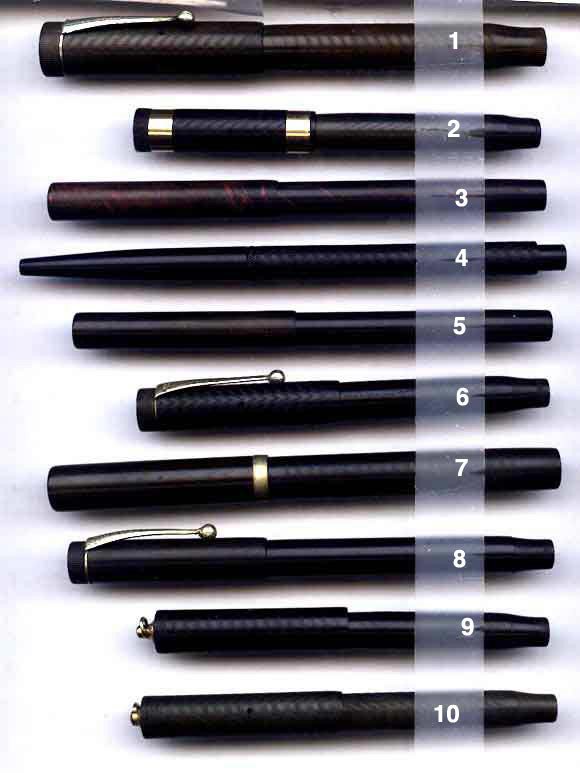
Lucky Curve imprint on barrel. Parker's revolutionary underfeed preventing ink blots (patented 1894). Filling system evolution: eyedropper -> click filler (1905) -> button filler (1913). Numbered models #1-#28 span this era with hundreds of configurations. #20 is the most common. Jack Knife safety cap variants (1909+) prevent leaks. Gold/sterling overlays (#30-#76) command premium prices.
Parker’s revolutionary underfeed design and the foundation of the company’s first four decades of production (1894-1929).1
The Innovation
The Lucky Curve feed — patented in 1894 — used a curved channel that exploited capillary action to draw ink back into the sac when the pen was stored vertically.1 This prevented the ink blots that plagued every other fountain pen of the era. It was the innovation that made Parker.
The Lucky Curve Line
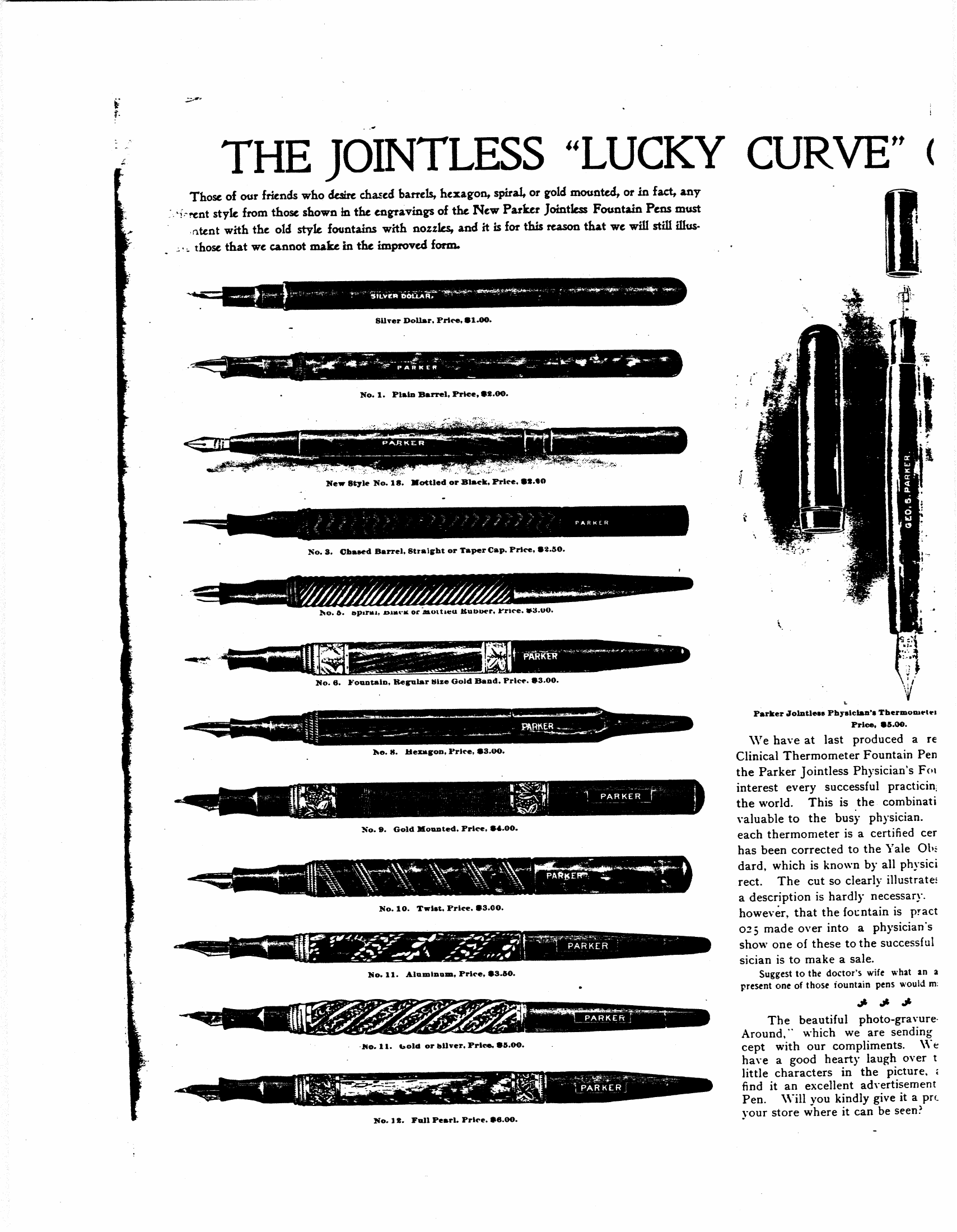
The Lucky Curve name encompasses hundreds of numbered models (see Lucky Curve #1-#28) across multiple filling systems:1
- Eyedropper (1894-1920s): manual ink filling via nib removal
- Click filler (1905-1913): button mechanism, problematic
- Button filler (1913-1929): Parker’s most successful early system
- Jack Knife Safety (1909+): twist-lock cap preventing leaks
From the $1 Silver Dollar school pen to the $250 diamond-studded De Luxe custom pieces, the Lucky Curve line spanned every price point.1
Rare Colors
The Sachs-Fultz Collection holds Lucky Curve pens in extraordinary rare colors including Magenta Pastel and Magenta Moire — among the rarest Parker color variants.2