
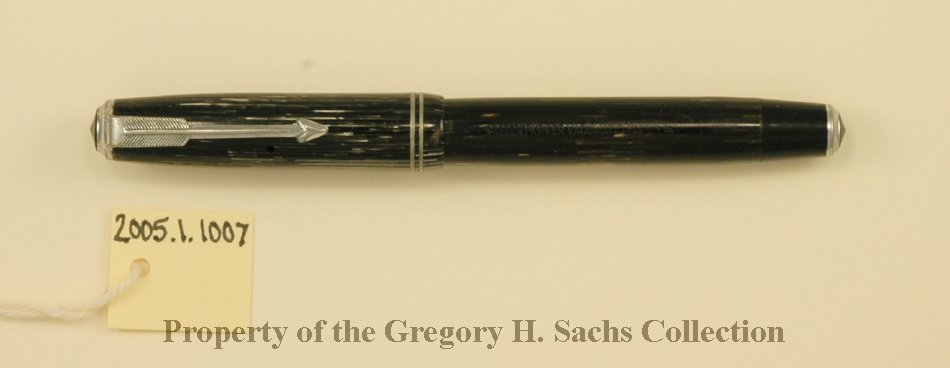
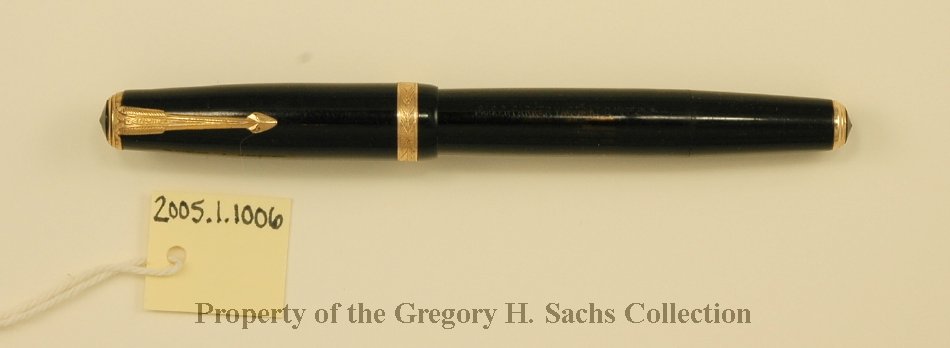
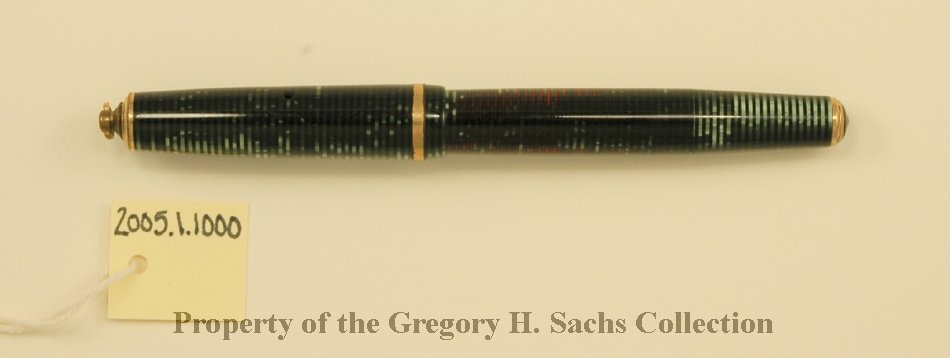
Parker · 1933-1948
Parker Vacumatic
Variants
| Model | Material | Price | Notes |
|---|---|---|---|
| Golden Arrow (1932) | Test market, 5-month production, opaque colors | Only 60 pens for initial Chicago test. Extremely rare. | |
| Vacuum Filler (1932-33) | Transition name before Vacumatic | Lock-down twist-fill, fat plunger | |
| Senior Maxima | Largest size, 139mm x 16mm, three cap rings (1937+) | ||
| Major | Best-seller, 131mm x 14mm (1937+) | ||
| Debutante/Sub Deb | Ladies sizes (118-121mm x 12mm) | ||
| Imperial | Gold-plated cap (1939+) | ||
| Imperial Ensign/Princess | 14k solid gold (1939+) | $1000+ | |
| Imperial Coronet | Yellow/green solid gold | Extremely rare | |
| Signet | Solid gold trim (1939-41) | ||
| Shadowave (bottom line) | Wavy pattern, cheaper than laminated (1938-40) | ||
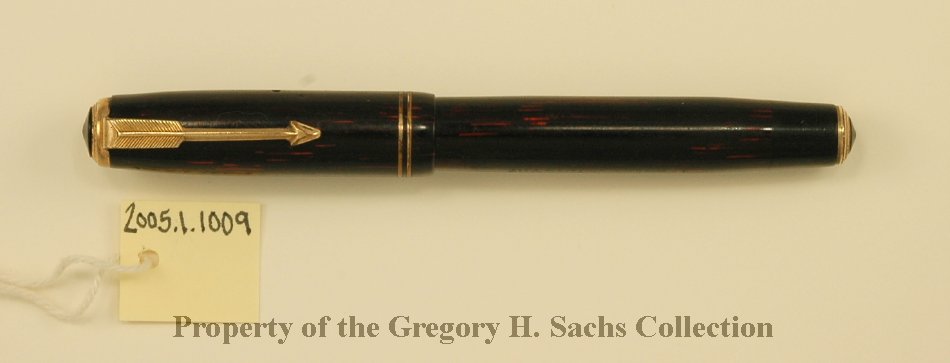
| Canadian Candy Stripe | Burgundy/Brown/Green stripes (Canadian production) | Made from Valentine/Victory stock | |
| Demonstrator | Transparent celluloid for dealer display | ||
| Lockdown filler (1933-36) | Twist-lock plunger, aluminum, early models | ||
| Speedline filler (1937-48) | Non-locking plunger, streamlined |
What to Look For
Diaphragm always needs replacing. Check plunger moves freely. Jewels should match barrel color. Blue Diamond clip mark (1939+) = lifetime guarantee. Filling system evolution: lockdown twist-fill (1933-36) -> speedline (1937-41, aluminum) -> plastic plunger (1942-48, wartime). 8 special-purpose nib variants (A-H) include superfine, music, stenographic. Canadian production continued to 1953. Golden Arrow first-year pens (1932, only 60 made initially) are the rarest.
Parker’s flagship pen from 1933 to 1948 — a revolutionary design featuring a vacuum-filling system and translucent laminated celluloid barrel that let you see the ink level.1
History
The Vacumatic began as the “Golden Arrow” — a test-market pen sold in a single Chicago store in 1932, with only about 60 pens produced.1 It was renamed “Vacuum Filler” for national launch in March 1933, then “Vacumatic” by June 1933.1 The pen replaced the Duofold as Parker’s premium line and remained the flagship for 15 years.
The Filling System
The Vacumatic’s signature innovation was its diaphragm filling system: pressing a plunger compresses a rubber diaphragm inside the barrel, creating a vacuum that draws ink up through the nib.1 This evolved through three generations:
- Lock-down twist-fill (1933-1936): Fat aluminum plunger, lockable by thumb twist1
- Speedline fill (1937-1941): Non-locking aluminum plunger, one-hand operation1
- Plastic plunger (1942-1948): Aluminum replaced by plastic due to wartime metal rationing1
Colors
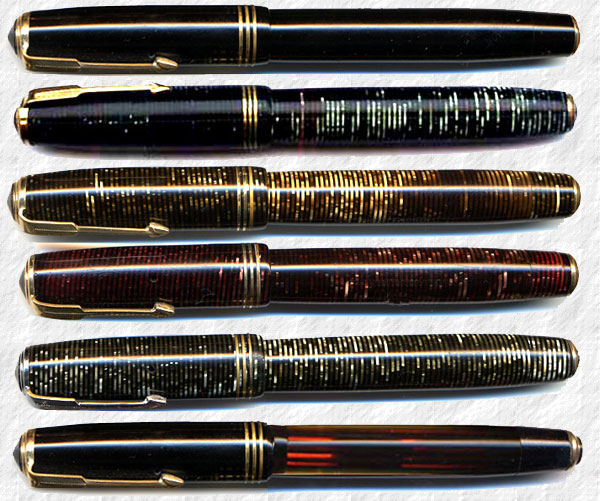
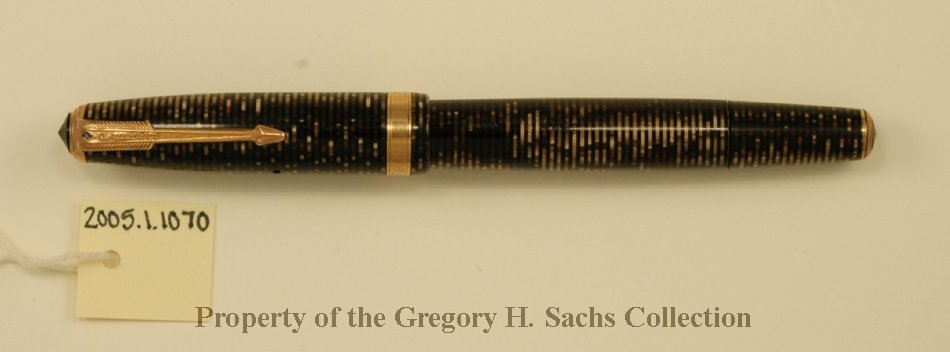
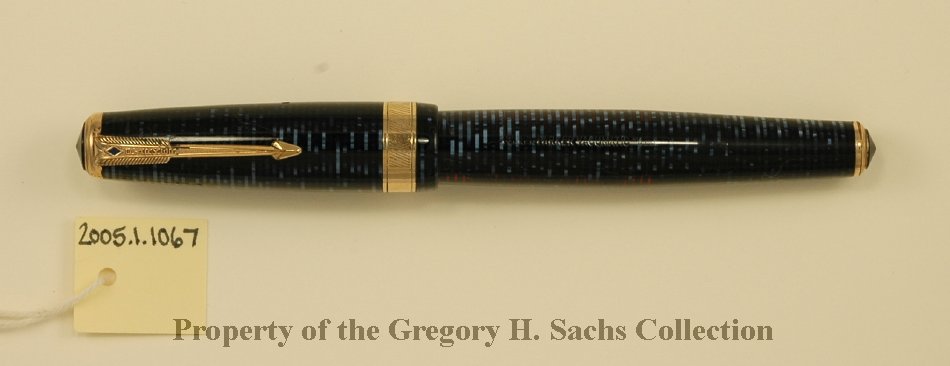
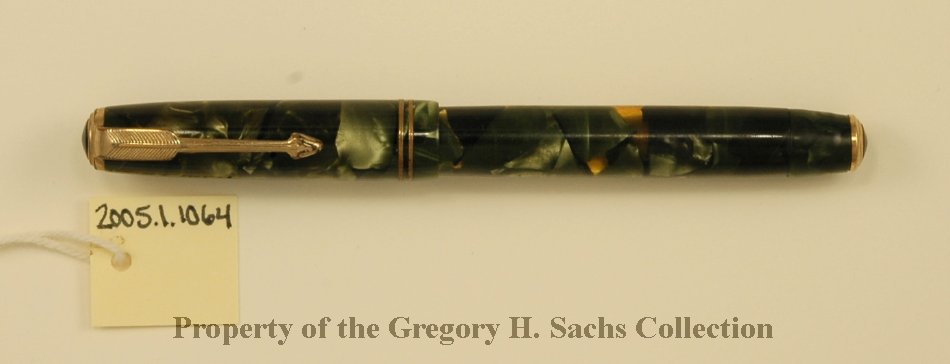
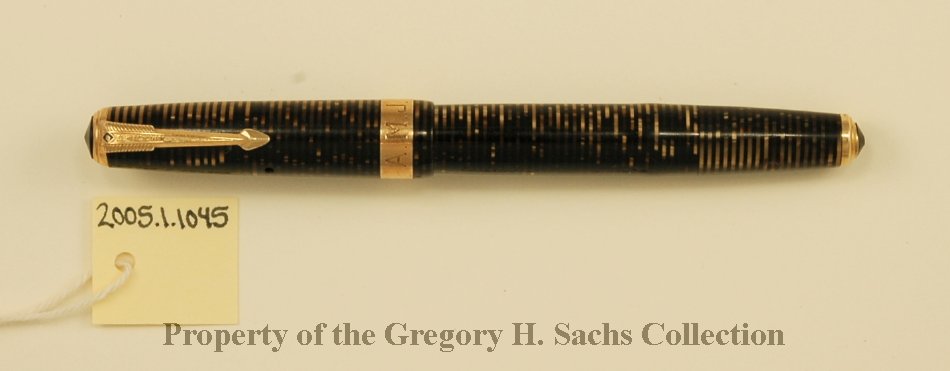
The laminated pearl celluloid is the Vacumatic’s visual signature — translucent stripes that glow when held to light:1
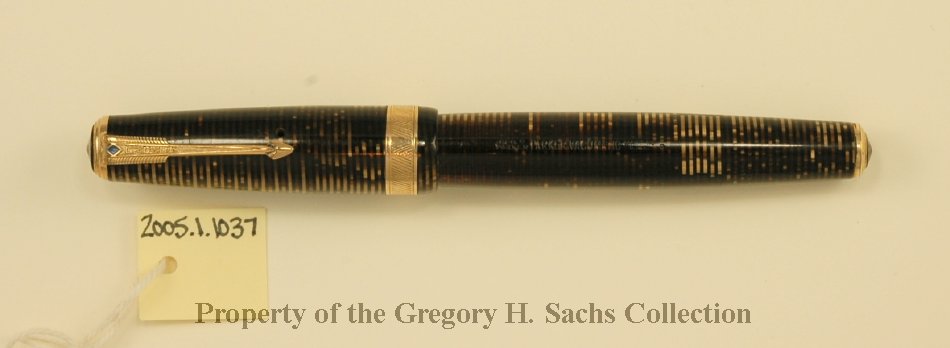
- Golden Pearl — warm amber stripes (the most common)
- Silver Pearl — cool grey stripes
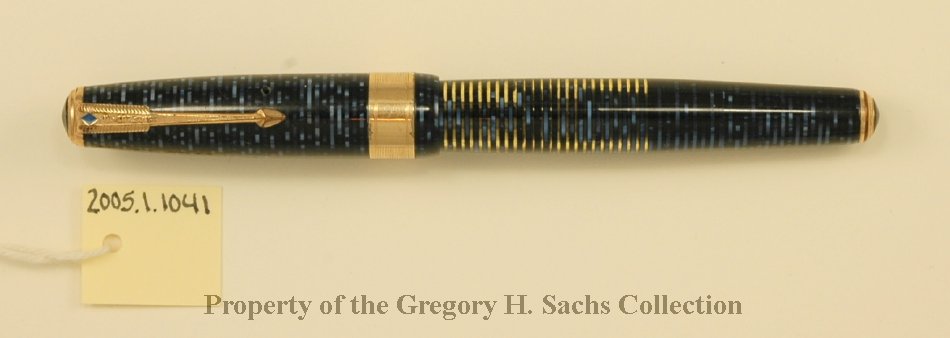
- Azure Pearl (Blue Diamond) — blue stripes, introduced 1941
- Emerald Pearl — green stripes
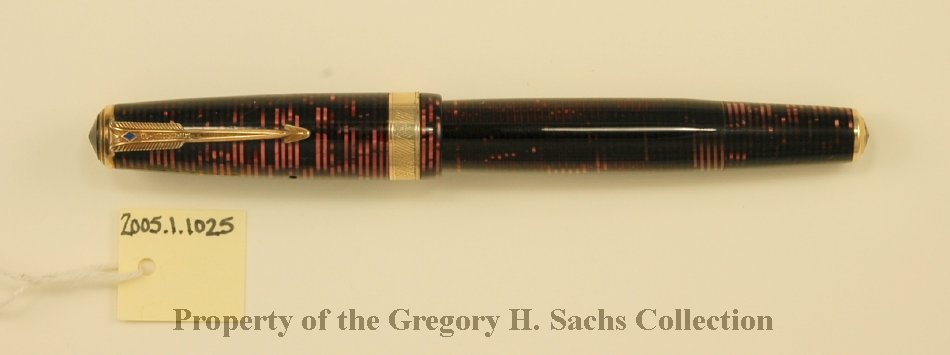
- Burgundy Pearl — red stripes (discontinued 1941)
- Shadow Wave (bottom line) — wavy pattern in Black, Grey, Burgundy, Green, Brown
The Blue Diamond clip mark (introduced 1939) indicates Parker’s lifetime guarantee.1
Sizes
The size range expanded dramatically over the pen’s life, from 3 sizes in 1933 to 7 by 1938:1 Senior Maxima (largest, 139mm), Slender Maxima, Major (best-seller, 131mm), Standard, Slender, Junior, and Sub Deb/Debutante (smallest, 118mm).
Imperial Line
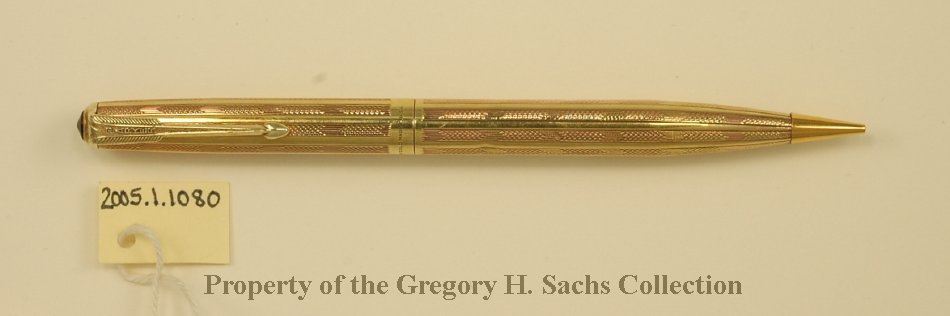
In 1939, Parker introduced luxury Imperial variants: gold-plated caps, solid 14k gold Ensign and Princess versions, and the extremely rare Imperial Coronet in yellow or green solid gold.1 The Signet featured solid gold trim (discontinued 1941).1
Identification
The diaphragm always needs replacing — they deteriorate with age.2 Check that the plunger moves freely. Jewels (barrel-end caps) should match the barrel color. No cracks in laminated celluloid. Canadian production continued until 1953 with unique “Candy Stripe” variants.1
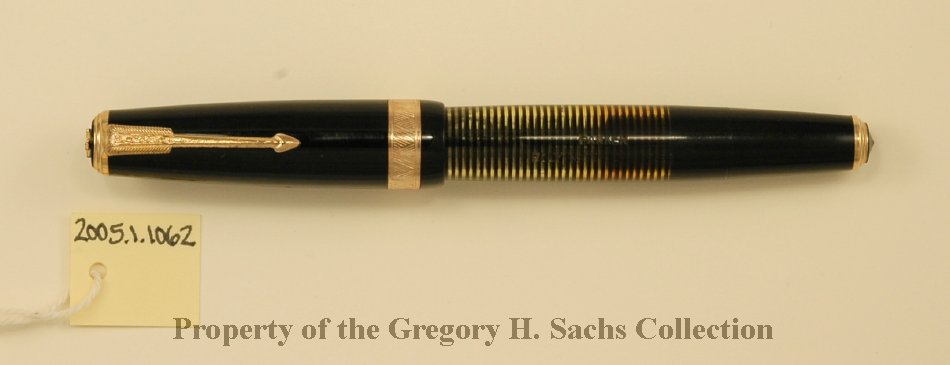
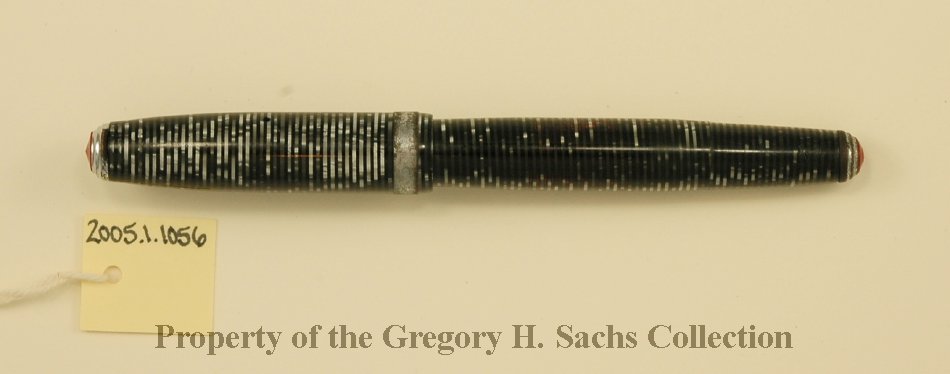
The Sachs-Fultz Collection holds Vacumatics in every standard color plus rare variants including 14K Gold Imperial, Silver Pearl Medic’s, and a Holy Water Sprinkler.3